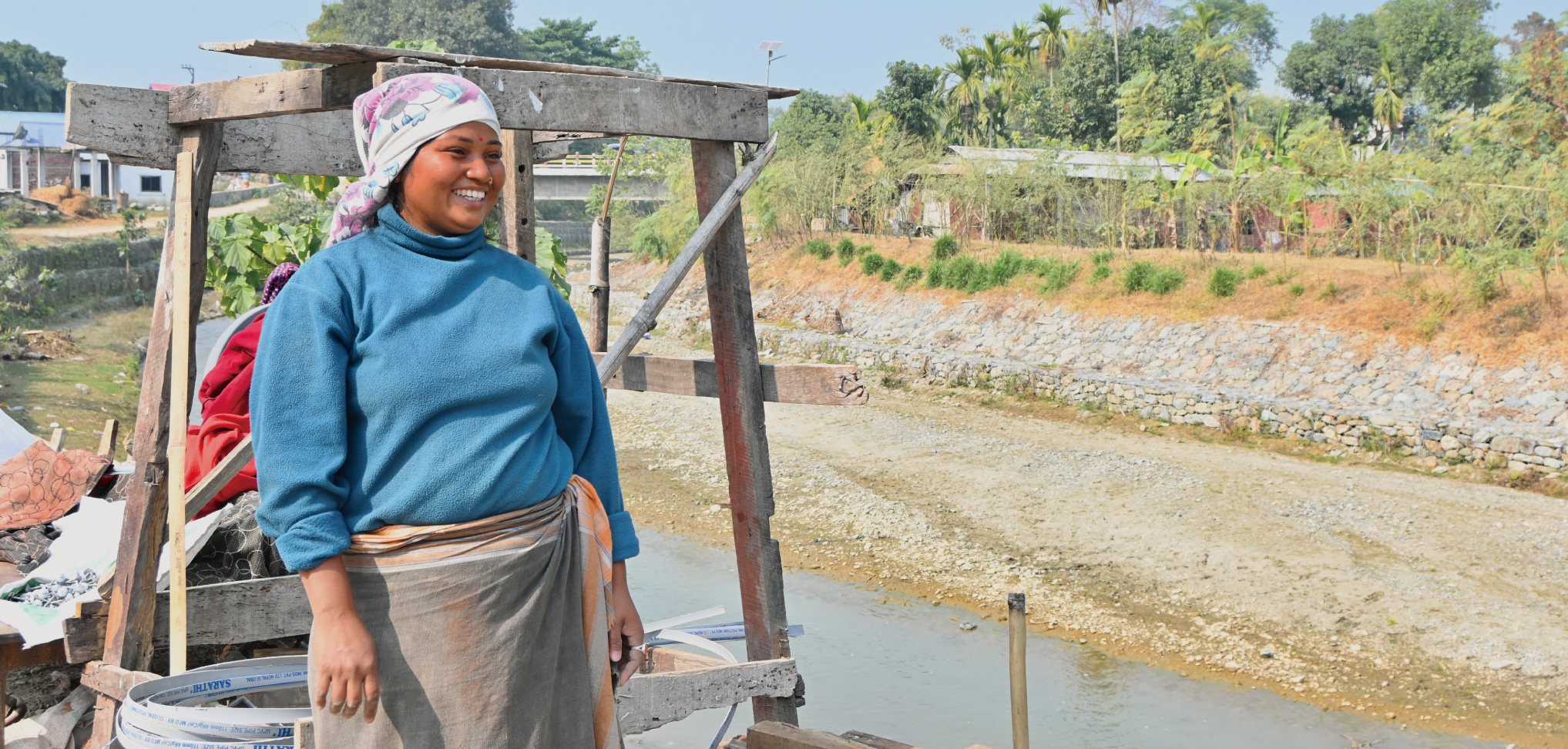
Floods caused by heavy monsoon rains occur almost every year in the plains of southern Nepal. Despite this, disaster risk reduction (DRR) capabilities and measures at local government and community level remain limited. Support from NGOs is still inadequate.
The Underlying Issue
In Morang District, where our project is implemented, floods regularly cause extensive damage to houses, livestock and crops. Although Nepal mandates the establishment of Disaster Management Committees (DMCs) at all administrative levels, many local committees remain inactive or lack the capacity to carry out their roles.
SHAPLA NEER’s Approach
SHAPLA NEER works to strengthen disaster risk reduction capacity by raising awareness among communities and authorities along river basins, encouraging community members to actively participate in disaster management and promoting the use of water resources to build more resilient livelihoods.
● Activities for Local Communities
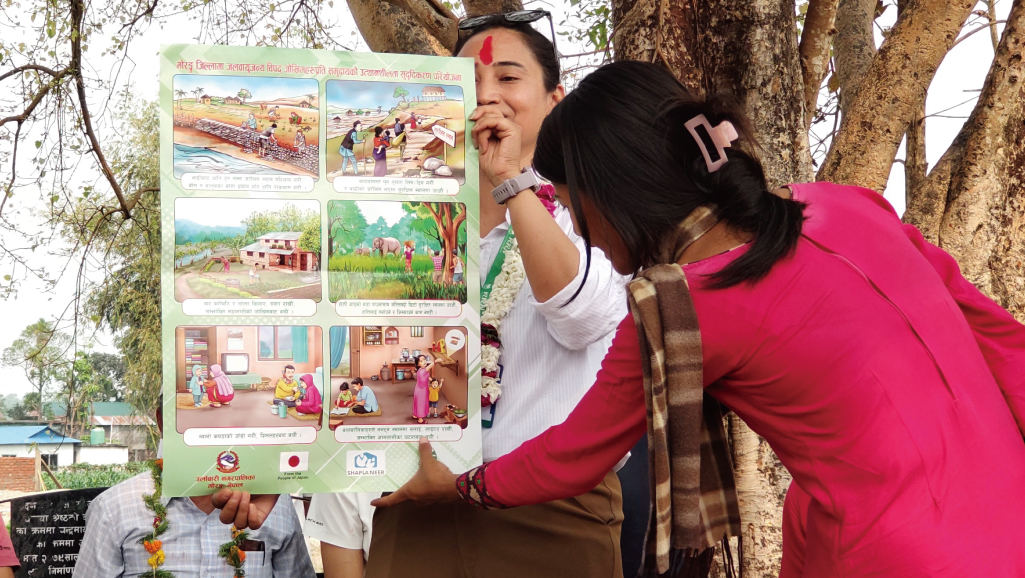
SHAPLA NEER supports strengthening of community-level DRR through measures such as developing emergency communication network and establishing maintenance systems for the flood control infrastructure. Theses are carried out via Community Disaster Management Committee established in each tole. We also raise DRR awareness through community radio broadcasts and street plays by local memebers. In addition, we provide agricultural training for local farmers, to help improve their livelihoods.
SHAPLA NEER supports strengthening of community-level DRR through measures such as developing emergency communication network and establishing maintenance systems for the flood control infrastructure. Theses are carried out via Community Disaster Management Committee established in each tole. We also raise DRR awareness through community radio broadcasts and street plays by local memebers. In addition, we provide agricultural training for local farmers, to help improve their livelihoods.
● Activities with Local Governments
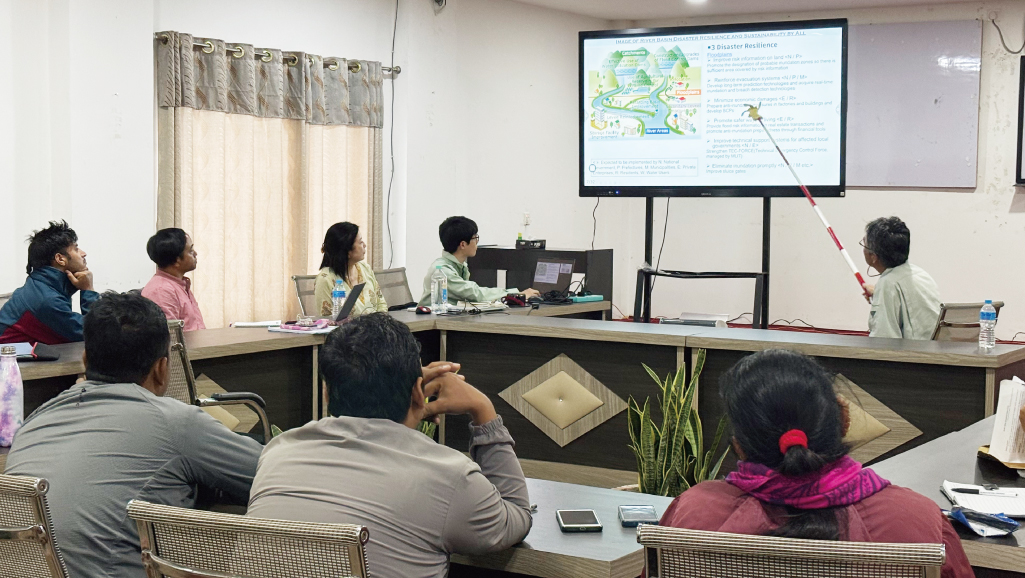
Through DRR workshops, training and meetings, SHAPLA NEER strengthens the disaster management capacity of local governments. We also work to enhance coordination between local governments and communities, to ensure more effective DRR implementation.
Through DRR workshops, training and meetings, SHAPLA NEER strengthens the disaster management capacity of local governments. We also work to enhance coordination between local governments and communities, to ensure more effective DRR implementation.
● River training and basin management
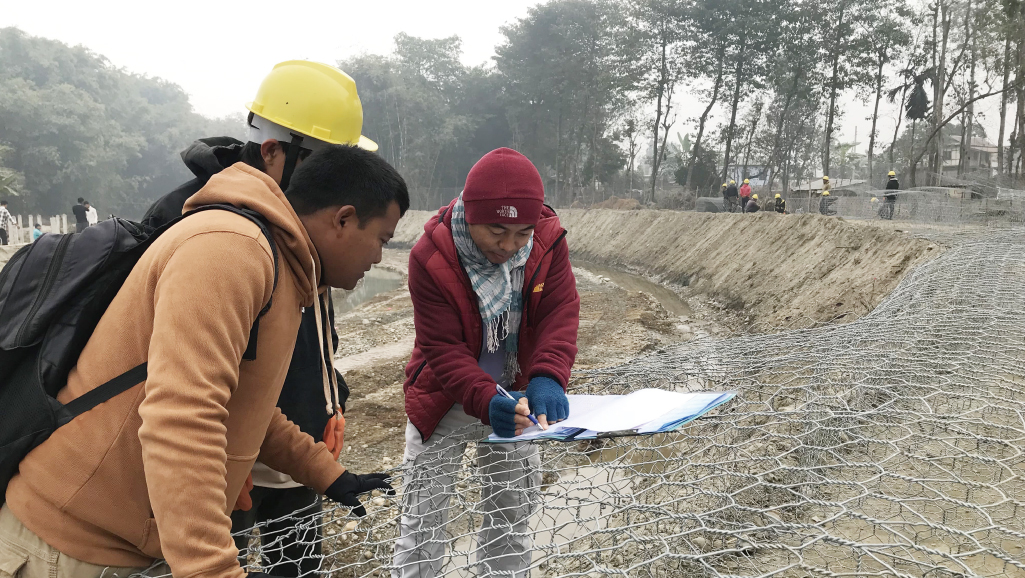
River widening, embankment construction and gabion work help reduce flood risks. Irrigation and spring-water facilities enable communities to utilize water resources safely. In addition, Japanese experts provide technical support and introduce river-basin management technique working closely with local authorities, we help strengthen local capacity and create more resilient communities.
River widening, embankment construction and gabion work help reduce flood risks. Irrigation and spring-water facilities enable communities to utilize water resources safely. In addition, Japanese experts provide technical support and introduce river-basin management technique working closely with local authorities, we help strengthen local capacity and create more resilient communities.
Basic Information
| Project site | Urlabari Municipality, Morang District, Koshi Province, Nepal |
|---|---|
| Project duration | May 2023 〜 April 2026 |
| Number of beneficiaries | 4000 |
Our Partner Organization
| Name of the organization | RRN (Rural Reconstruction Nepal) |
|---|---|
| Number of human resources | 100 (As of April 2025) |
| Summary of the organization | One of the largest NGOs in Nepal, established in 1993, the ‘Grassroots Institute for Training and Services-Nepal’ (GRITS-Nepal) was founded by volunteers who were graduates of the Institute of Agriculture and Animal Science (IAAS). The mission of RRN is to improve the lives of the poorest rural people, particularly rural women, peasants, landless people and other disadvantaged and socially oppressed strata of Nepalese society by providing them opportunities for their socio-economic empowerment. |